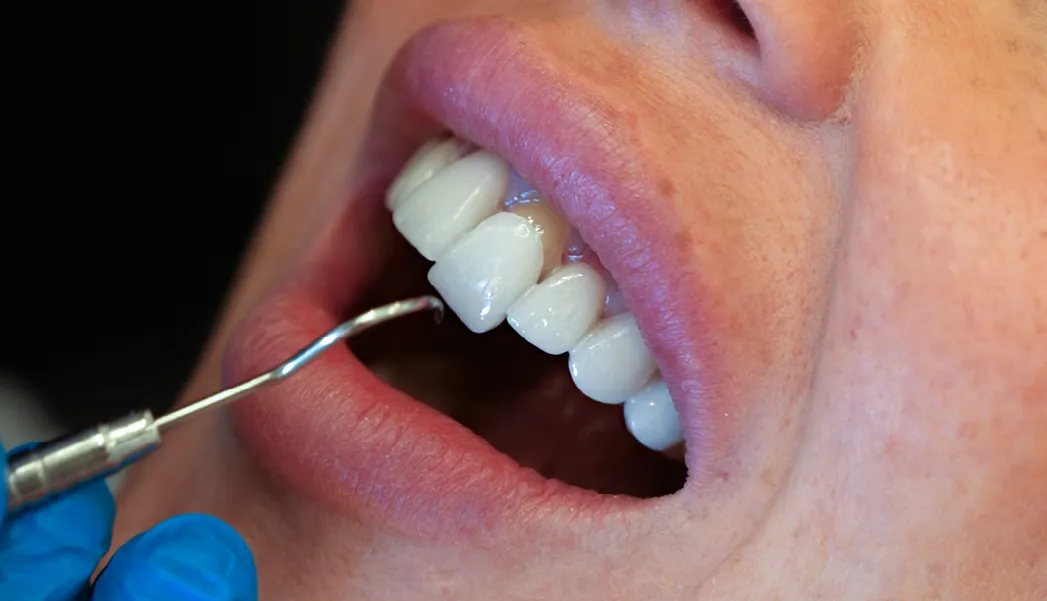
Handcrafted Press E.max Laminate Veneers from €250 (£225) per veneer — individually crafted by a specialist ceramic artist using genuine Ivoclar IPS E.max Press.
A 5% discount applies to cash payments. Accommodation is not included.
Understanding Your Options:
E.max Cad vs E.max Press
Not all E.max veneers are made the same way. The material — lithium disilicate — is the same in both cases, but the fabrication method makes a meaningful difference to aesthetics, minimum thickness, and the level of artistic refinement possible.
E.max cad
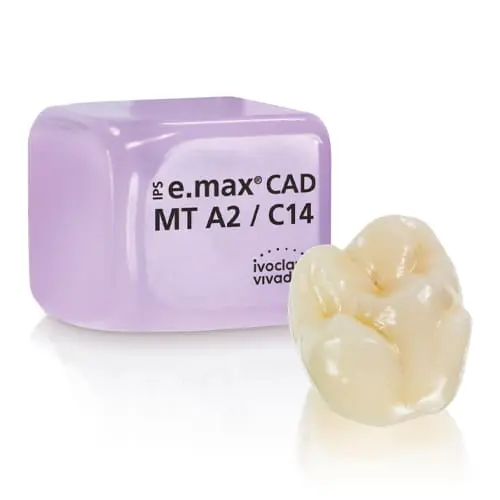 CAD/CAM veneers are milled digitally from a pre-crystallised ceramic block. The process is efficient and consistent, producing reliable results with a fast turnaround. We offer CAD/CAM E.max at our clinic and it is a sound clinical option for single-tooth restorations or straightforward cases.
For extensive smile makeovers, however, we generally prefer Press E.max veneers. The heat-pressing technique allows for thinner restorations than milling can reliably achieve, and gives the ceramic artist greater control over fine incisal detail, subtle shade gradations, and incisal halo effects — elements that contribute meaningfully to a natural-looking result.
Ideal for: Single-tooth restorations, patients with tight timelines, straightforward cases not requiring full-arch smile design.
E.max Press (Our Recommended Choice for Smile Makeovers)
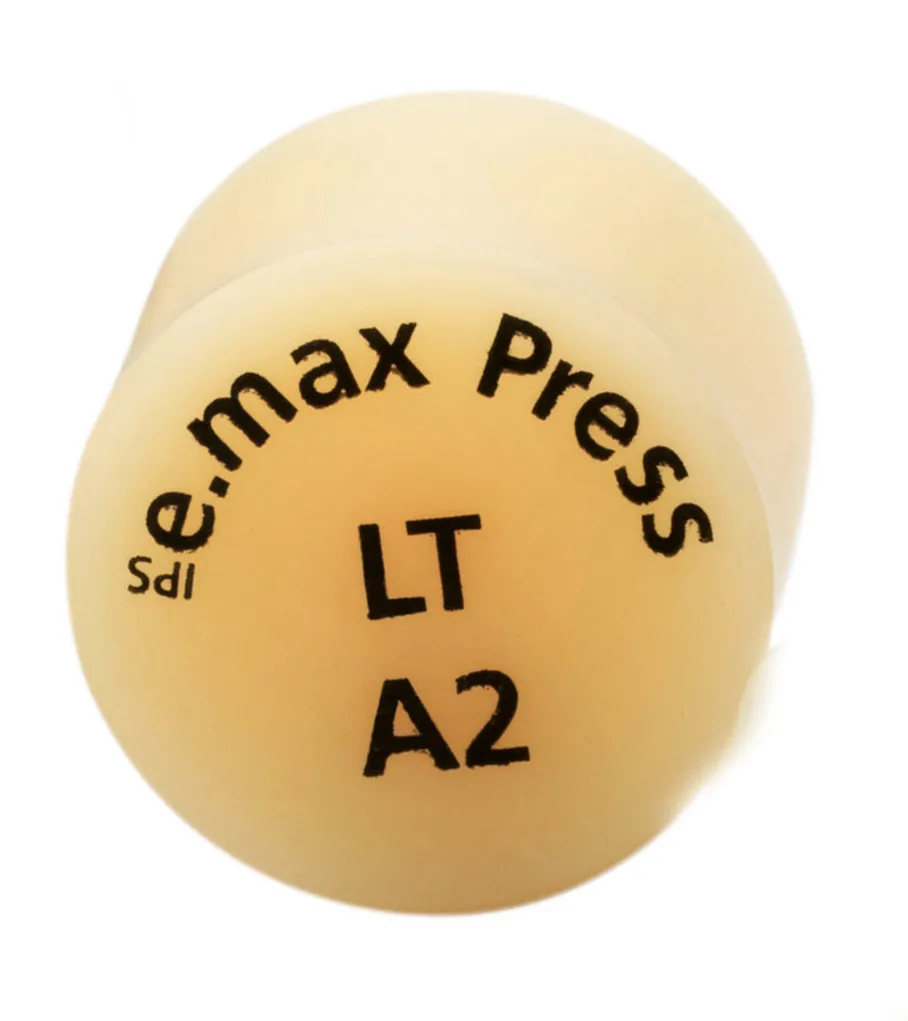 Press E.max veneers are fabricated by hand, using a heat-pressing technique in which lithium disilicate is heated and pressed into a custom mould. This process allows your ceramic artist to work with thinner restorations — as thin as approximately 0.3 mm — and to build in fine surface detail, translucency variation, and natural shade transitions that closely replicate the optical properties of real enamel.
The result is a veneer that looks like it belongs in your mouth. Colour, translucency, and shape are customised for your individual smile, not replicated from a standard block.
Ideal for: Full smile makeovers, patients with high aesthetic expectations, anterior cases where natural light transmission and colour gradation matter.
[Request a Free Smile Consultation]
Why We Prefer Press E.max for Smile Makeovers
Your veneers are fabricated by a specialist ceramic artist based in Izmir with extensive experience in high-aesthetic anterior restorations. Craftsmanship at this level is not something that can be rushed or automated.
Each veneer is designed and built individually, with attention to surface texture, incisal translucency, and the way light interacts with the restoration under different conditions. This is the work that separates a veneer that looks natural from one that looks artificial — and it is the primary reason why our process takes the time it does. A beautiful smile is still created by skilled hands, not by machines alone.
We use digital impressions taken with a 3Shape intraoral scanner. This eliminates the need for traditional impression trays, produces more precise digital models, and allows our laboratory to begin work with highly accurate data from the outset.
Why Treatment Takes 7–10 Days
Patients travelling from the UK or Ireland often ask why they need to allow 7–10 days for veneer treatment. The timeline reflects what the process actually requires — not an estimate padded for convenience.
Here is what happens during that time:
- Day 1–2: Smile design consultation, shade matching, and digital impressions using the 3Shape scanner. A digital or physical wax-up is prepared so you can review the proposed shape and proportions before any preparation begins.
- Day 3: Tooth preparation under magnification. Conservative preparation removes only the minimal amount of enamel necessary — typically less than 0.5 mm — to accommodate the veneer. Temporary restorations are placed while your permanent veneers are fabricated.
- Days 4–7: Laboratory fabrication. Your ceramic artist presses, layers, and characterises each veneer by hand. This stage cannot be shortened without compromising the result.
- Day 8–10: Try-in, shade review, any adjustments, and final bonding. Adhesive bonding of porcelain veneers requires precision and adequate time. This appointment is not a brief one.
Clinics that claim to complete full smile makeovers in two or three days are typically using a same-day CAD/CAM workflow. That may be appropriate for certain cases, but it is not what press veneers require. Cosmetic dentistry should never be rushed. Allowing enough time for design, fabrication, try-in and final bonding helps achieve a more predictable and natural-looking result.
Who Is a Good Candidate for Laminate Veneers?
Porcelain veneers deliver excellent, long-lasting results for the right patient. Understanding whether you are a suitable candidate before you travel is an important part of the planning process.
Veneers tend to work well for patients with:
- Healthy gums and underlying tooth structure
- Minor spacing or small gaps between teeth
- Teeth that are slightly uneven in shape or size
- Discolouration that does not respond to whitening
- Minor chips or surface imperfections on otherwise sound teeth
- Minimal crowding that does not require orthodontic correction
Veneers may not be the most appropriate option for patients with:
- Severely crowded teeth requiring significant repositioning
- Heavily restored teeth with large existing fillings or root canal treatment
- Significant bite problems or heavy bruxism (teeth grinding)
- Active gum disease or poor underlying tooth health
If any of the above apply to you, zirconia crowns may offer a more appropriate and durable solution. Our dentists will assess your clinical photographs and X-rays during your consultation and give you an honest recommendation before you commit to treatment.
[Learn More About Zirconia Crowns Cost →] [Compare Zirconia Crowns vs E.max →]
[Request a Free Consultation to Discuss Your Suitability]
What Affects the Cost of E.max Veneers?
E.max veneer prices in Turkey vary considerably between clinics. The difference is not simply the veneer itself, but the material used, the fabrication method, the experience of the dentist and ceramic technician, and the amount of time dedicated to each case. Understanding what drives that variation helps you evaluate your options with greater confidence.
Several factors influence what you pay for E.max veneers — and each of the following plays a role in the cost, the quality of the result, and the time required to achieve it:
- Press vs CAD/CAM Fabrication. The fabrication method affects both the cost and the aesthetic outcome. CAD/CAM milling is faster and less labour-intensive. Press veneers require a skilled technician to heat-press, layer, and characterise each restoration by hand — a process that takes significantly more time and carries a higher laboratory cost.
- Ceramic Artist. Hand-pressed veneers depend on the skill of the person making them. A specialist ceramic artist working exclusively on high-aesthetic anterior cases brings a level of experience that is reflected in the price. Clinics that outsource to general-purpose laboratories or use less experienced technicians can produce veneers at lower cost, but the level of artistic refinement is often different.
- Conservative Preparation. Minimal preparation — carried out under magnification — requires more time and clinical precision than standard preparation. Preserving healthy enamel is a clinical priority, but it demands a careful, unhurried approach that adds to the overall treatment time and cost.
- Digital Workflow. Taking impressions with a 3Shape intraoral scanner rather than traditional trays produces more accurate digital models and reduces the risk of errors at the laboratory stage. The technology itself represents an investment that contributes to the overall cost of treatment.
- Genuine Ivoclar Materials. Not all clinics use the same lithium disilicate product. Genuine Ivoclar IPS E.max Press ingots are manufactured to tightly controlled specifications and carry a long track record in published clinical research. Alternative materials — including well-regarded options from South Korea and lower-cost generics — are priced differently and may vary in translucency, consistency, and long-term documentation.
- Treatment Time. Adequate time is one of the most significant cost factors — and one of the most variable between clinics. Press veneers require several days of laboratory fabrication alone, followed by a try-in appointment to review shade and fit before final bonding. A 7–10 day treatment window reflects what the process genuinely requires.
Each of these factors contributes to the overall cost of treatment and to the quality of the result you can expect.
Compared to private veneer costs in the UK and Ireland — where a single porcelain veneer typically ranges from £800 to £1,500 or more — our pricing represents a significant saving without reducing the clinical or aesthetic standard of the work.
Genuine Ivoclar E.max vs Other Lithium Disilicate Materials
The term “E.max veneer” is used loosely in dental tourism marketing. It is worth understanding what it actually means, because not all lithium disilicate materials are equivalent.
IPS E.max (Ivoclar, Liechtenstein) is the original and most clinically documented lithium disilicate ceramic system. Ivoclar manufactures E.max Press ingots and E.max CAD blocks to tightly controlled specifications, with a long track record in published clinical research. When our dentists refer to E.max, they mean genuine Ivoclar IPS E.max — not a product that carries a similar name.
Amber Mill (Hassbio, South Korea) is a well-regarded lithium disilicate alternative with genuine clinical credentials. Published research indicates it offers high translucency — in some studies, greater than IPS E.max CAD — though with slightly different masking properties. It is a credible material used by reputable laboratories.
Generic lithium disilicate materials — including a range of products manufactured primarily in China — are used by some lower-cost clinics. These materials are considerably cheaper to source. Quality and consistency can vary, and long-term clinical data is limited compared to established brands.
We use genuine Ivoclar IPS E.max Press ingots because consistency, predictability, and documented long-term performance matter when we are preparing your natural teeth to accommodate a restoration. The material itself is only one part of the equation. Preparation, bonding protocol and laboratory craftsmanship are equally important to the long-term success of porcelain veneers.
Our Clinical Philosophy
We approach veneer treatment as a conservative procedure. Tooth preparation is carried out under magnification, removing only the amount of enamel that the veneer requires — nothing more. For press veneers, this is often as little as 0.3 mm. Where a tooth requires no preparation at all, we will tell you.
We complete a thorough assessment before any preparation begins. If your teeth or gums are not in the right condition for veneers, we will not proceed. If a different restoration — such as a zirconia crown — would serve you better, we will explain why and let you decide.
Our goal is not simply to make your teeth look whiter. Our goal is to preserve as much healthy tooth structure as possible while creating a smile that still looks like it belongs to you.
[View Our E.max Before & After Gallery →] [Read Our Complete Smile Makeover Guide →]
[Book a Free Consultation]
Frequently Asked Questions
Start With a Free Consultation
Whether you are ready to book or still gathering information, a consultation is the right first step. Send us your clinical photographs and we will give you an honest assessment of whether Press E.max veneers are suitable for you, what the treatment would involve, and what result you can realistically expect.
Our dentists will not recommend treatment that is not appropriate for your teeth. If another option would serve you better, we will tell you.
[Request a Free Consultation] [See E.max Before & After Results →]